AI isn’t making affiliate marketing easier. It’s making it noisier.
You can generate more content than ever, faster than ever, and still end up with the same result as before. No traffic, no clicks, no commissions.
That’s the part most comparisons miss.
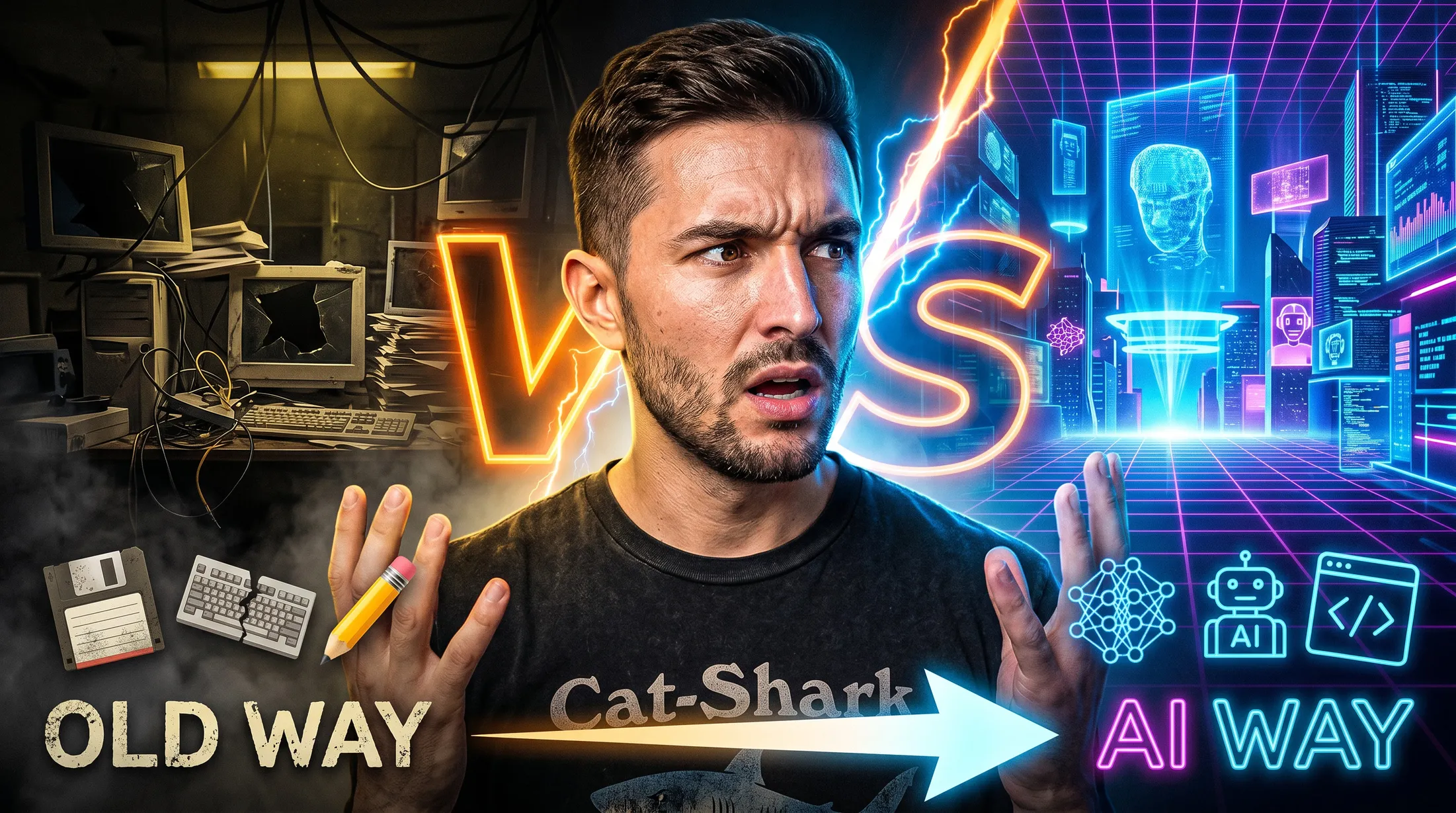
This isn’t really about AI versus traditional affiliate marketing. It’s about understanding what actually works underneath both approaches.
Before AI tools showed up everywhere, affiliate marketing was slower.
You had to research keywords manually, write content from scratch, and test ideas one at a time. It took more effort, but it forced you to understand the process.
That created a certain kind of discipline.
You had to think about why someone would search for something. You had to structure content carefully. You couldn’t just publish ten articles in a day and hope something worked.
Looking back, that limitation was useful.
It made you focus on quality and intent instead of volume.
AI doesn’t replace affiliate marketing. It compresses the time it takes to do it.
You can now:
That speed feels like an advantage, and it is.
But it also creates a new problem.
You can move so fast that you skip understanding what you’re doing.
I’ve done this myself, publishing content that looked polished but didn’t connect with anyone.
Traditional affiliate marketing is slow but intentional.
AI-driven affiliate marketing is fast but easy to misuse.
That’s the trade-off.
If you take the traditional approach, you’re forced to learn through repetition. If you rely too heavily on AI, you risk building something that looks complete but has no depth behind it.
The difference shows up in results over time.
Sites built with intention tend to grow steadily. Sites built only with automation often stall after the initial push.
This is where things usually go wrong.
People assume AI replaces the need to understand affiliate marketing. It doesn’t.
You still need to:
AI can assist with all of these, but it doesn’t handle them for you.
When I first started using AI tools, I thought I could skip some of that thinking. It didn’t work.
The content felt complete, but it didn’t convert.
This is one of the biggest shifts.
AI-generated content often looks good on the surface. It has structure, flow, and clear sections.
But something feels off when you read too many of these articles.
They lack specificity.
Traditional content usually came from someone who spent time thinking through the topic. AI content often needs that extra layer added manually.
That’s why editing matters more now than it did before.
This is where the comparison becomes more practical.
Traditional methods build understanding first, then scale.
AI allows you to scale first, but only if you already understand what you’re doing.
If you don’t, you end up scaling confusion.
That sounds harsh, but it’s what I noticed after testing both approaches.
Once I slowed down and started thinking through each piece of content again, even while using AI, results improved.
Search engines don’t reward you for using AI or for avoiding it.
They reward relevance.
If your content answers the question better than what’s already out there, it has a chance to rank. If it doesn’t, it won’t.
This is where both approaches meet.
Traditional content had an advantage because it was harder to produce, so less of it existed. AI increases competition, which raises the standard.
Now your content needs to be clearer, more helpful, and more aligned with intent.
This part hasn’t changed at all.
People click affiliate links when they trust what they’re reading.
Traditional content often built trust through personal experience or detailed explanations. AI content needs to recreate that feeling, and that takes effort.
You have to:
Without that, the content feels generic.
And generic content rarely converts.
The best results usually come from combining both approaches.
Use AI for speed, but keep the traditional mindset.
That means:
This balance took me time to figure out.
At first, I leaned too heavily on automation. Then I went back to writing everything manually. Neither extreme worked as well as combining both.
This question is slightly misleading.
AI doesn’t replace traditional affiliate marketing. It builds on it.
If you understand the fundamentals, AI gives you an advantage. If you don’t, it amplifies mistakes.
That’s why some people are seeing faster results now, while others feel stuck despite having access to better tools.
The difference isn’t the technology.
It’s how it’s used.
If you’re just starting, it might be tempting to rely fully on AI.
It feels efficient. It feels modern. It feels like the right move.
But the smarter approach is slower at the beginning.
Learn how affiliate marketing works. Understand why content ranks and why people click.
Then bring AI into that process.
That’s where it starts to feel like an advantage instead of a shortcut that doesn’t quite work.
And once that clicks, the comparison between AI and traditional methods stops mattering. You’re just using the best parts of both to build something that actually grows.